frithfarm1

Frith Farm

Friday, April 6, 2012

Porcine Plows

Spring pigs have arrived! They are already hard at work, rooting up the plot where we will plant our winter squash come June. Their job is to mix in a truckload of leaves to increase the soil organic matter. We'll see if they're up to the task!


Thursday, April 5, 2012

Rhubarb & Raspberries

We recently planted rhubard and rasberries from cuttings generously donated by the folks at Edgewater Farm in Phippsburg. It may be a year or more before we are able to harvest much, but even the distant hope of rhubarb pie and fresh summer berries was plenty of incentive to get these in the ground!


Sunday, March 11, 2012

Aya Alliums!

The other day marked the beginning of the season with planting of our first seeds in the greenhouse. We use soil blocks - compressed cubes of soil that allow for transplanting with little to no jostling of seedling's roots. This year I decided to make our own soil mix from compost, peat, vermiculite, and a potpourri of rock powders. As the chickens watched from their half of the greenhouse (separated by bird netting), we worked most of the day and mixed, formed, and planted 1800 blocks, which - if all grows well - will produce over 5000 onions by fall.


 We use a technique made popular by Eliot Coleman which consists of planting 3-4 seeds in each block. Rather than transplanting individual seedlings stripped from their soil, we transplant a third as many blocks without disturbing the roots. As the onions sharing a block grow, they simply push each other apart and show little difference in final size when compared to uniformly spaced single transplants. These pictures of last year's onions show the process.


Saturday, March 10, 2012

Chicken Salad

As we transitioned the greenhouse from winter greens to spring seedlings, we let our chickens help by cleaning off the mustards, lettuces, and spinach before we spread the ground cover in preparation for seed starting. It was a satisfying sight to see: ecstatic layers-to-be feasting on the fresh mesclun greens in a time of year when green is not a common color.


Friday, February 24, 2012

Pandora's Box

Pandora's Box has become the metaphor of choice for describing infrastructure repair projects here on the farm. The house and barn, being 200+ years old, and the various little outbuildings, though younger, all showcase a diversity of frugality, re-used materials, and construction shortcuts.

One example of a Pandora's box occurred last spring when I went to secure a loose clapboard on the barn. What I thought could be solved with a few nails, 20 minutes later looked like this:


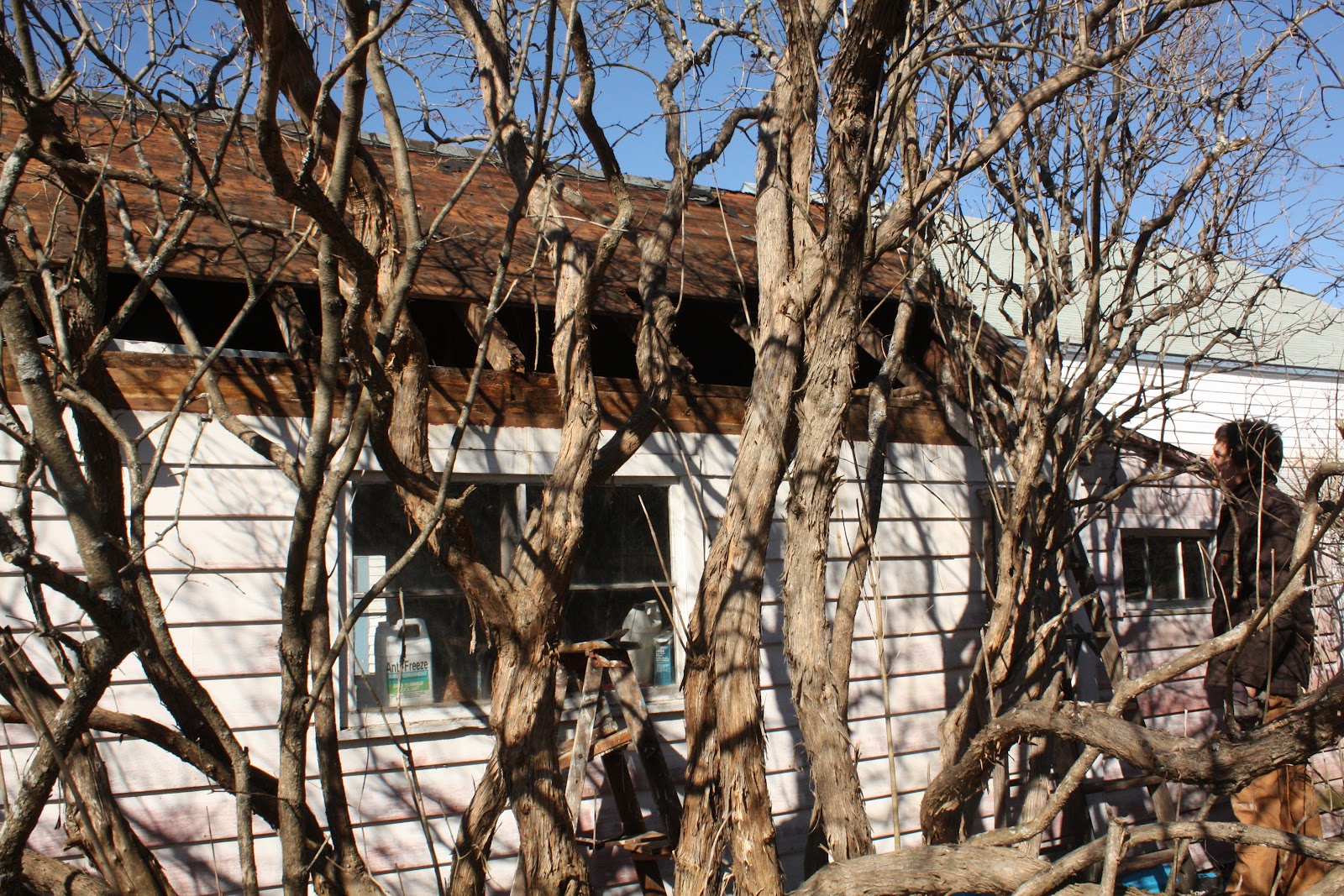
The latest Pandora's Box has been the garage roof. You might think I would know better by now, but I really thought I was looking at an afternoon of screwing some sheets of metal roofing over the few remaining shingles on the garage. Needless to say, there was more to it, and once the box was opened there was no going back. I'll let the photos speak for themselves.


Monday, January 16, 2012

Soil Toil

Sir Albert Howard said, "the health of soil, plant, animal and man is one and indivisible." I would argue that this concept of interconnectedness can extend to the health of communities, regions, or even of the planet itself. For me it all starts with the soil, and that's why I have gone to great effort in this first year to feed the land which I now rely on to produce both sustenance and income.

There are many ways to measure the health of soil. Some trust their senses, rubbing dirt between their fingers, inhaling its aroma, tasting its richness. Perhaps a more dependable metric is the health of the plants the soil grows (without the crouches of pesticides or highly soluble fertilizers), or the health of the people eating those plants. But for us science-loving Westerners, there's something appealing about a soil test. I can't say I rely on them, or even entirely believe them, but seeing those quantitative results, accurate to the nearest hundredth of a part per million, somehow excites my inner engineer and has been known to trigger a whole slew of excel spreadsheets.

However abstract or overly precise, these soil test results at least give a sense of the progress that has been made in building the farm's soil over the last year. The first result is from soil sampled as I purchased the property in November, 2010. The second is from that same soil sampled 12 months later.


I find little more exciting than the thought of continuing to build this soil's health, to maximize its fertility and the nutrition of the food it produces. I look forward to ever improving it, and take pleasure and pride in each added bucket of compost, wheelbarrow of leaves, and stand of cover crop.

Friday, January 6, 2012

Big Girls & Little Ladies

Much of the preparation for winter has revolved around our noble egg layers, both present and pending. The mature layers have recently moved several climate zones south, to a newly constructed hoophouse behind the barn. They seem quite happy in their warm sunny quarters, free to roam into the wintery outdoors but often preferring to roost in the protected sunshine of the hoophouse.


A new round of 80 laying chicks arrived a few weeks ago. After spending a week in the farmhouse kitchen (and providing 24-hour entertainment for Saffron and Charlie) they moved to the greenhouse for more space and access to soil and sun. They are Golden Comets, a breed known for their friendliness, ability to forage, and excellent production. They should begin laying in May, allowing us to double our available egg shares this coming season.


Sunday, November 27, 2011

Fall Flavors

A flipbook summary of the last month:

Clouds

Red Maple

Leaves

Kitten

Pac Choi

 Garlic beds

Garlic planting

Advanced garlic planting

Greenhouse

Turkeys